

Listening to Texas: Heartfelt Discoveries from the Fall 2025 Early Childhood Tour
CHILDREN AT RISK visited 12 local communities throughout Texas to engage in grassroots conversations centered on data and the dynamic needs of the child care workforce.
Every fall, our Early Childhood Education team packs our bags and hits the road, because we know the most important data isn’t found in spreadsheets—it’s found in conversations with you.
The Fall 2025 Texas Tour was truly special. Engaging with providers, educators, and community leaders across 12 communities, we weren’t just gathering feedback; we were sitting knee-to-knee, listening deeply to the triumphs and struggles that shape the day-to-day lives of those serving our state’s youngest learners.
The Texas Tour has become an instrumental part of our work. It’s our unique opportunity to step away from the policy papers and see, firsthand, how current practices are unfolding, where concerns are weighing heavily, and where the incredible, innovative work is taking hold.
Traveling across this great state, we witnessed the immense diversity of landscapes and communities. Yet, despite all those differences, one thing consistently stood out and warmed our hearts: the shared, unwavering commitment that unites every provider and local leader. The collective effort to serve children and families in the best ways possible is the powerful thread that holds Texas early childhood education together.
This year, in preparation for the Sunset Commission process, we asked four specific questions: 1) In what ways are agencies working well together? 2) In what ways could cross-agency work improve? 3) In what ways are agencies working well independently, and 4) In what ways can agencies improve independently. This is what we learned.
Key Findings: Listening to Your Voices
While the challenges are real and significant, we were encouraged by the positive momentum many of you shared as well. Here are the specific, powerful realities shared with us during the Fall Tour, focusing on areas that still need urgent attention:
1. STANDARDS ACROSS AGENCIES
The biggest barrier providers face is the feeling that the goalposts are constantly moving. This creates confusion, mistrust, and inequitable experiences. The most promising improvement is the decrease in the wait time for TRS assessments.
- Varying Interpretations: Licensing representatives and TRS mentors interpret standards differently, leading to conflicting guidance and expectations.
- System Discrepancies: Trying to manage requirements across Child Care Regulations (CCR), Texas Rising Star (TRS), Texas Early Childhood Professional Development Systems (TECPEDS) and Child Adult Care Food Program (CACFP) and accreditation often feels like juggling five different rulebooks.
2. communication
Texas Tour Communities told us how difficult it is to get reliable, timely information, resulting in missed opportunities for vital support.
- Problem Solving: Many Child Care Administrators told us they struggle to determine which agency to contact for specific issues.
- Information Location: Child Care Administrators indicated they have a hard time locating information and would like to see a single, easy-to-use place to find consolidated policy updates, grant information, or required forms.
- Rapport & Quality: Overall, stakeholders reported strong TRS Mentor relationships and reported positive communications resulting in TRS attainment and growth.
3. governance
The lack of coordination across state agencies (TWC, HHSC, TEA, etc.) forces Child Care Administrators to navigate duplicated or contradictory requirements. At the same time, attention to Child Care System improvements are appreciated.
- Administrative Overlap: Child Care Administrators often have to fulfill the same administrative work for multiple systems.
- A Call for Reform: We heard strong interest in creating more structural reforms, like creating a single, shared eligibility system for families.
- Attention to Improvement: Stakeholders were pleased with the specific focus on improving the Texas Child Care System through the Governor’s Task Force, The Quad Agency, and the Sunset Commission process.
4. Technology & data systems
The rollout of new systems like KinderSystems/TX3C has caused real hardship, proving to be confusing, unreliable, and insufficiently tested.
- Reliable Income: System errors, inaccurate absence reporting, and subsequent recoupments are causing significant financial stress for providers.
- System Management: To protect their centers, providers are forced to manage duplicate paperwork to manually ensure system accuracy.
5. Funding & Access
While state investments are appreciated, stakeholders shared that the supports often don’t go far enough or doesn’t cover the full cost of high-quality operation.
- Cost of Quality: TRS Level 4 reimbursement often falls short of covering the true cost of implementing high-quality practices.
- Penalties: Payment models that penalize centers when enrolled families don’t attend put providers in an impossible financial bind.
- Access Investment: We heard applause when we discussed the $100 Million Dollar investment the Legislature approved for child care scholarships. And questions about how many more children can be served in your communities.
- Cost of Workforce: We learned that ARPA supports were helpful in maintaining programs and staff and learned that many of those dollars were used for wage supplements. The elimination of those funds has left programs struggling.
Media Contacts:
Morgan Gerri, 832.600.9354
Rashena Franklin 713.301.4577
STAY ENGAGED
Sign up to receive regular updates from our Early Childhood Education team.
PAST TEXAS TOURS
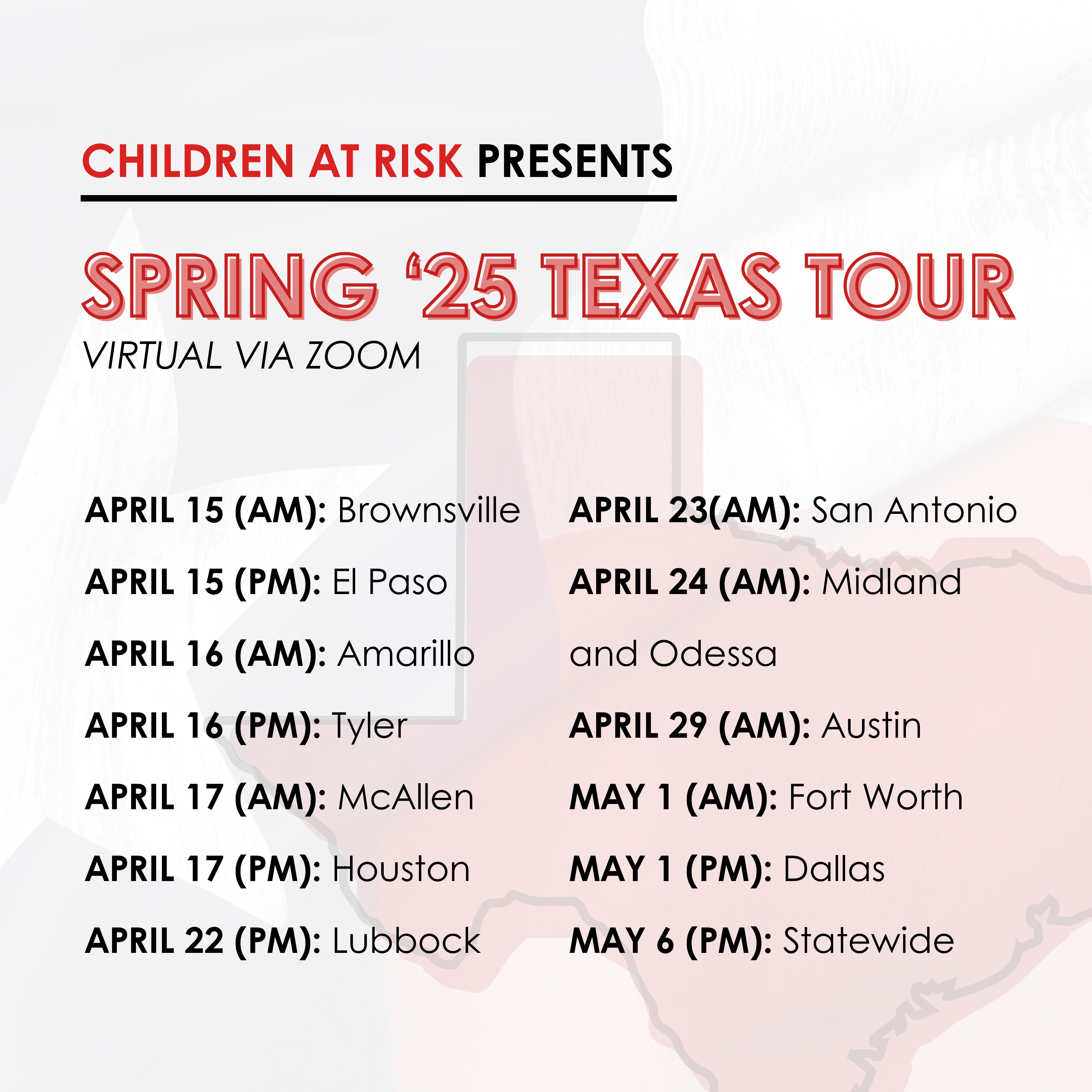
Explore our findings from the Spring 2025 Texas Tour
READ MORE FROM C@R
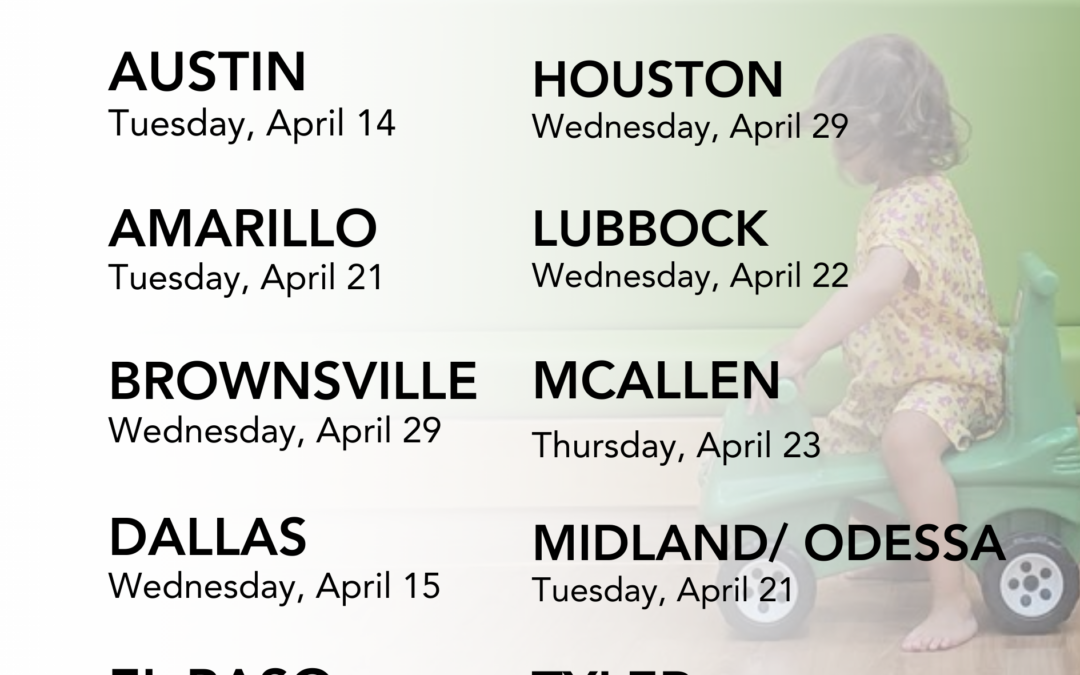
Spring 2026 | Early Childhood Education Texas Tour
Each spring, the CHILDREN AT RISK Early Childhood Education team hosts virtual community roundtables across 12 major cities in Texas. During these sessions, C@R experts will share updates from the latest Paving the Way report, including regional analysis of Local...

Paving the Way to Quality 2026
Analysis of Texas LWDB Fiscal Spending of Child Care Quality Investments TEXAS (January 28, 2026) - CHILDREN AT RISK has released its second analysis of Local Workforce Development Board (LWDB) spending across Texas. Focusing on investments made in the 2024 Board...

Press Release: Strong Start Launch
Strong Start: Greater Houston Early Childhood Education Alliance will transform the early childhood education sector across the Greater Houston area, addressing the growing gap in child care access throughout the Gulf Coast region. Media Contacts:Morgan Gerri,...

Seeds of Change: Recap of the 2025 Early Childhood Education Summit
This virtual gathering brought together legislators, policy experts, state leaders, advocates, and community stakeholders to reflect on recent wins for Texas children and chart the course for the work ahead. On August 14th, CHILDREN AT RISK gathered leaders,...
Moving Forward: Our Commitment to Action
The powerful insights you shared are not just noted; they are driving our immediate recommendations. We are committed to using your voices to advocate for a system that truly supports you.
1. Governance & Systemwide Coordination
- Standardize: Align definitions, eligibility criteria, documentation timelines, and program expectations across all agencies.
- Unify Governance: Establish a single, unified early childhood governance structure to reduce fragmentation.
2. regulatory alignment & workforce capacity
- Statewide Calibration: Implement uniform training and robust statewide calibration for all regulatory and quality staff.
- Modernize Oversight: Shift oversight practices to emphasize technical assistance, relationship-building, and developmental supports over compliance.
3. contracting accountability & performance management
- Strengthen Accountability: Improve contractor performance accountability, especially with KinderSystems/TX3C implementation.
- Pilot Testing: Require pilot testing of all new systems or policies before statewide rollout to protect providers from harm.
4. Technology, Data Systems & Transparency
- Systems Audit & Redesign: Conduct a full audit and redesign of KinderSystems/TX3C, with a focus on real-time support.
- Public Hub: Develop a public-facing, centralized information hub that consolidates all rules, forms, contacts, and grant opportunities across agencies.
5. Streamlining Access for Texas families & providers
- Joint Eligibility: Create a shared eligibility system that allows families to apply once to qualify for multiple supports.
- Guarantee Payment: Guarantee payment for reserved CCS slots to stabilize your provider finances regardless of attendance.
6. Strategic investment in system stability
Significantly increase dedicated state funding of the Texas early education system and child care infrastructure to respond to the issue of waitlists (currently nearly 95,000 children are on waitlists for state-funded scholarships), rising tuition, and workforce poverty. This essential public investment must be targeted toward:
- Affordability & Access: Fully funding the Child Care Services (CCS) subsidy waitlist and increasing reimbursement rates to ensure subsidies cover the cost of high-quality care, thereby reducing the financial burden on working families.
- Workforce Compensation: Creating a mechanism to increase early childhood educator other system worker wages (CCR, TRS) and address staffing shortages that limit child care capacity.
Stay Engaged
Thank you, Texas. Your dedication is inspiring, and we are honored to partner with you.
Sign up to receive regular updates from our Early Childhood Education team.
Explore our findings from the Spring 2025 Texas Tour