

How are the Children?
Seeds of Change: Recap of the 2026 Early Childhood Education Summit
Written by Lucy Lusk, Summer 2026 Media Fellow, CHILDREN AT RISK
On June 11, CHILDREN AT RISK and Texas Prenatal-to-Three (PN-3) Collaborative, in partnership with the Texas Family Leadership Council (TXFLC), hosted the 2026 Early Childhood Education Summit: Seeds of Change. Through sponsorship from Texas PN-3 Collaborative and H-E-B, this event united policy experts, nonprofit leaders, and advocates alike to answer one question: How are the Children?
“All the children are well. Imagine that statement being true not only in your community but throughout Texas, and not just in Texas but throughout the country…” said Kim Kofron, Executive Director of Early Childhood Education with CHILDREN AT RISK.
Moderated by Santrice Jones-Hare, Director of Strong Start at CHILDREN AT RISK, the summit opened with a panel discussion centered on early childhood education featuring Diane Girouard of NAEYC, Lyn Lucas of CHILDREN AT RISK, and Sarah Siegel Muncey of Neighborhood Villages. Panelists discussed the need to better equip early educators and child care organizations with the resources they need to help children “lay the foundation for a lifetime of success,” said Girouard.
In Texas, 413 ZIP codes are Child Care Deserts, where the need for child care is three times greater than the number of available seats for low-income working families. Of those, 263 are Chronic Child Care Deserts, meaning they have lacked adequate supply to meet community need for at least three consecutive years.
As the supply of child care fails to meet local demand, the economic and emotional pressures that caregivers and early educators face continue to increase.
“They’re stressed about the mental health of their kids, they’re stressed about the cost of running a child care center, running a home, and the kids are really feeling that — and that’s a cycle because the kids bring that stress to school,” Muncey said.
Girouard noted that federal and state leaders have an opportunity to address some of these challenges by leveraging existing resources, including TANF and state rainy-day funds.
The summit then turned to a discussion on the intersection of immigration policy and early childhood in a panel moderated by Texas Immigration Law Council’s Managing Attorney Krystal Gómez. Experts Suma Setty (Associate Director of Immigration Research and Advocacy, Center for Law and Social Policy (CLASP)) and Monica Ordonez (Program Director, Bachman Lake Together) joined the conversation to discuss how fear surrounding immigration status and enforcement affects children, families, schools, and other early learning environments.
Speakers highlighted declining attendance at schools, rising numbers of immigrant workers leaving their jobs, and child care teachers serving as legal guardians when parents are deported. Still, Setty pointed to the ways early care providers continue to support families by providing meals, sharing information, and helping connect families to legal and nutrition resources.
Ordonez emphasized the importance of collaboration and co-funding, while grounding the conversation in one clear reminder: “You have to work with the community.”
In the Infant Early Childhood Mental Health panel, moderator Kerrie Judice (Director of Policy and Advocacy, TexProtects), invited attendees to consider how early intervention can shape a child’s long-term well-being.
“Interventions need to be provided earlier on. It’s key to preventing complex needs in young children,” said Judice.
Amy Felkner, Senior Director for Child and Family Policy at Meadows Mental Health Policy Institute, added important context: “We know that 50% of mental diagnoses emerge before the age of 14. Mental illness is a pediatric illness.”
Panelists also shared crucial insights into the intergenerational aspect of childhood mental health, stressing the importance of caregiver mental health on child mental health. Jenny Baldwin (Director of Home Visiting, Any Baby Can) also spoke on this double-pronged approach:
“How are the children doing? To answer that question, we have to ask: How are the adults in their lives doing?”
Following this discussion, the panel turned its attention to Danielle Ewen (Principal/Consultant, Sixth Street Associates), who provided us with an expansive Federal Policy Update. From the proposed SAVE Act to possible amendments to the Head Start program, Ewen made one thing clear: federal decisions shape the everyday lives of children and families, and every voice plays a role.
We also heard from moderator Mandi Sheridan Kimball (Vice President & Chief Government Affairs Officer, CHILDREN AT RISK), who shared that “Things are heavy right now,” – a sentiment shared by many advocates. Diana Forester, Director of Health Policy at Texans Care for Children, emphasized that many tools already exist to help ease that stress and connect eligible children to Medicaid and CHIP. The challenge, she noted, is that many families still face “administrative barriers” that hinder them from accessing care they qualify for. Jamie Olson, VP of Policy and Advocacy at Feeding Texas, also discussed the passage of H.R. 1 (the One Big Beautiful Bill Act) in July 2025, which enacted deep funding cuts in SNAP. Since its passage, Texas has seen a 13% decline in SNAP participation. Despite a persistent demand for hunger relief programs, which represents a staggering drop of nearly 470,000 food-insecure participants, 250,000 of whom are children.
Across each conversation, one message remained: the well-being of children depends on the strength of the systems and communities that surround them. When families have access to food, health care, child care, education, and support, children flourish.
Kim Kofron closed out the summit with this quote by abolitionist and statesman Frederick Douglass: “It is easier to build strong children than to repair broken men.”
We are grateful to every speaker, participant, sponsor, and partner who joined us for this year’s summit. Together, we can keep working toward a Texas where all children are well.
MORE LIKE THIS

Early Childhood Education & Childcare Testimony: House Committee on Trade, Workforce & Economic Development Hearing
Texas House Committee on Trade, Workforce & Economic Development HearingAugust 26, 2026Texas has a child care system that serves thousands of children and families every day. While the system is not perfect and there are important improvements...

Houston Child Care Sector Braces for Reduction in Subsidized Child Care Seats
Estimates indicate that upwards of a thousand Houston-area children are likely to no longer receive subsidized child care as state and federal changes place pressure on the sector. Media Contact:Morgan Gerri, 832.600.9354 TEXAS (August 27, 2026)...
C@R Testifies at Sunset Commission TWC Hearing
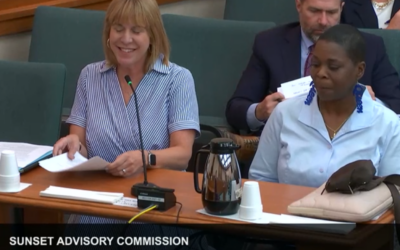
C@R Provides Testimony Focused on Opportunity Youth, Early Childhood, and Anti-TraffickingAugust 12, 2026CHILDREN AT RISK leaders Mandi Kimball and Kim Kofron provided public testimony before the Texas Sunset Advisory Commission during its August...

Fall 2026 Early Childhood Texas Tour
Each fall, CHILDREN AT RISK brings early childhood leaders and stakeholders together for community-centered conversations in 12 major Texas cities to exchange insights, examine regional experiences, and envision a stronger future for child care...

Press Conference: Child Advocates Discuss Proposed Head Start Overhaul and State-by-State Impacts
Notice of Proposed Rulemaking (NPRM) removes significant federal regulations, shifting most standards toward state and local regulation Media Contact:Morgan Gerri, 832.600.9354 TEXAS (August 13, 2026) – On Thursday, August 6, the U.S. Department of...
Watch the Event Recording
Get Involved
Our vision is for the state of Texas to be the best possible place for children to grow and families to work. CHILDREN AT RISK’s team works tirelessly to listen to community needs and advocate for public policy that truly supports Texas children and families.
Stay in touch! Sign up for our regular newsletter today to receive monthly updates on the latest research, convenings, and advocacy opportunities.
Questions? Contact us at info@childrenatrisk.org.