

The Needs of Texas Opportunity Youth
Key Themes & Focus Group Findings
CHILDREN AT RISK conducted a series of regional focus groups across Texas to better understand the lived experiences of Opportunity Youth and Young Adults (OYYA). These conversations explored access to education and workforce opportunities, interactions with public benefits and state agencies, and the broader challenges related to stability, basic needs, and service gaps.
Key Findings
CONNECTIONS, REFERRALS & CONTINUITY OF CARE
- Contact Instability Makes Youth Hard to Reach & Harder to Retain
- Youth Ages 16–17 Fall Through Multiple Eligibility Cracks
- Strong Referral Pipelines… but Major Gaps in Youth Readiness & Engagement
- However, the biggest barrier is youth readiness, not referrals.
- Many opportunity youth are in survival mode, focused only on immediate needs like housing, food, or quick employment.
- Youth often disengage once the “crisis” is temporarily solved.
- The Enrollment / Eligibility Process Is Too Long, Confusing, and Repetitive
SYSTEMS ALIGNMENT & INTERAGENCY COORDINATION
- Fragmented Systems & Missing Workforce/Education Partners
- Severe Gaps in Data Sharing & No Shared Statewide OYYA System
- Lack of Awareness of Programs & Pathways – Youth Don’t Know What Exists
- Communication Preferences and Engagement Are Evolving and Systems Aren’t Keeping Up
WORKFORCE & EDUCATION/PROFESSIONAL READINESS
- Workforce Programs Need Better Alignment with Regional Labor Markets
- Workforce & Education Systems Are Deeply Misaligned
- Deep Misalignment Between Employer Expectations & Opportunity Youth Realities
- Limited Work Opportunities for Youth Under 18 – A Major Structural Gap
- Employers Are Not Prepared to Support Opportunity Youth – Training, Communication, and Flexibility Gaps Are Major Barriers
ADDITIONAL ISSUES
- Technology Access Remains Uneven
- Basic Needs Must Be Met Before Education or Employment
- Chronic Absenteeism Is the New Early-Warning Indicator ; Prevention is the Most Needed and Most Underfunded Intervention
- Transportation & Childcare Are Universal Barriers
- Mental Health & Housing Instability Threatens Every Other Goal
- Conflicting Expectations Push Youth Toward Peer Networks Rather Than Adults
Recommendations to Texas Support Opportunity Youth
CONNECTIONS, REFERRALS & CONTINUITY OF CARE
- Simplify the eligibility determination process for youth in youth- serving agency programs through the following actions:
- Develop “fast track” eligibility requirements for income-based eligibility such as evidence from year prior tax records and extend “self-attestation” protocols to 90 days.
- Provide free, expedited processes to obtain state identification cards for eligible work.
- For Youth Empowerment Services (YES), Youth Crisis Outreach Teams (YCOT) and peer programs, extend eligibility from age 18 to age 24 and align with workforce, housing, and higher education supports.
SYSTEMS ALIGNMENT & INTERAGENCY COORDINATION
- Create subcommittee or advisory committee focused on supporting opportunity youth and young adults (OYYA) (ages 16–24 not in school, training, or employment) across agencies.
- Appointments from: the Governor, Lieutenant Governor, Speaker of the House, Members include THECB, HHSC, DSHS, TJJD, and TWC Chair serves as Advisory Chair. Include 1-2 spots for Opportunity Youth and/or parents of OYYA.
- Create in statute a Youth Disconnection Prevention & Reengagement Ombudsman within TWC, appointed by the Governor, reporting to the TWC Executive Director, authority to coordinate statewide strategy, and required annual public reporting to the Legislature.
- Advance two-generational strategies throughout the Tri-Agency and related state systems to streamline services and strengthen outcomes for individuals and families.
- Direct DFPS to strengthen coordination with the Texas Workforce Commission, Texas Higher Education Coordinating Board, Local Workforce Development Boards (LWDB), and community colleges to expand former foster youth access to industry-recognized credentials, apprenticeships, and workforce-aligned certificate programs.
WORKFORCE & EDUCATION/PROFESSIONAL READINESS
- Expand public health career pipelines to include OYYA in paid apprenticeships, community health worker training, and targeted recruitment partnerships with LWDBs, reentry programs, and CBOs.
- Direct HHSC (in collaboration with TWC and THECB) to define and identify postsecondary programs that are “equivalent to SNAP E&T” components to ensure students enrolled in “credentials of value” have their coursework recognized as satisfying SNAP’s work requirements. This will improve completion rates for students and lead to greater self-sufficiency post-credentialing.
- Direct TWC and HHSC to develop and implement standardized contracting and reimbursement models for third-party SNAP E&T providers to be applied across all LWDBs & set ambitious goals to scale the number of third-party partners contracted to provide SNAP E&T, with an emphasis on community colleges and other credential-based training providers.
- Require HHSC to align SNAP E&T program requirements with the federal baseline (20 hours per week/80 hours per month) to simplify compliance, reduce administrative complexity, and support more consistent program engagement.
- Develop a statewide SNAP E&T provider dashboard tracking key program metrics, including enrollment, completion, job placement, and job retention.
FOR QUESTIONS OR COMMENTS PLEASE CONTACT:
Mandi Kimball, VP & Chief Government Relations Officer, mkimball@childrenatrisk.org,
Caroline Roberts, Senior Director of Public Policy, croberts@childrenatrisk.org
MORE LIKE THIS

Systems-Change for the Next Generation: Recap of the Child Safety, Security & Opportunity Summit
Written by Lucy Lusk, Summer 2026 Media Fellow, CHILDREN AT RISK On July 16th, CHILDREN AT RISK hosted their 2026 Child Safety, Security, and Opportunity Summit: Systems-Change for the Next Generation. With the support of our incredible sponsors,...

2026 OYYA Sunset Recommendations
Related: Click here to read all of CHILDREN AT RISK’s recommendations for the Texas Sunset Advisory Commission.Every 12 years, most Texas state agencies undergo a comprehensive review by the Sunset Advisory Commission, a process that includes staff...

Testimony to Texas HIA: Mental Health Impacts, Homelessness, and Criminal Justice System Recidivism
Interim Charge: Mental Health Impacts, Homelessness, and Criminal Justice System RecidivismJune 24, 2026Research consistently demonstrates that stable housing, meaningful employment, educational attainment, and access to health services are among...

State Senator César J. Blanco Passes Bill to Help Young Adults inWest Texas Get Back to School and Work
FOR IMMEDIATE RELEASE: Contact: Taylor Sanchez Taylor.sanchez@senate.texas.gov Austin, Texas – The Texas Senate has passed Senate Bill 1143, authored by Senator César J. Blanco, to help reconnect young adults in West Texas with education, job...
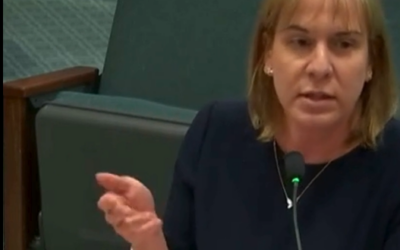
Advocating in Support of H.B. 213
Mandi Kimball, Vice President & Chief Government Affairs Officer with CHILDREN AT RISK, testifies in support of H.B. 213 during the March 18, 2025 Texas House Committee on Public Education. HB 213 is a re-filed bill and passed this committee...
Get Involved
Our vision is for the state of Texas to be the best possible place for children to grow and families to work. CHILDREN AT RISK’s Opportunity Youth & Young Adults team works tirelessly to listen to community needs and advocate for public policy that prevents youth disconnection, streamlines opportunities for re-connection, and truly support Texas’ next generation.
Stay in touch! Sign up for updates related to our ongoing work with Opportunity Youth and Young Adults.
Questions? Contact us at info@childrenatrisk.org.