

Texas House Committee on Intergovernmental Affairs
Interim Charge: Mental Health Impacts, Homelessness, and Criminal Justice System Recidivism
June 24, 2026
Research consistently demonstrates that stable housing, meaningful employment, educational attainment, and access to health services are among the strongest protective factors against homelessness and justice involvement.
Chair Bell and Members of the Committee:
Thank you for the opportunity to provide comments on the relationship between mental health, homelessness, and criminal justice system recidivism.
Children At Risk is a nonpartisan research and advocacy organization dedicated to improving the quality of life for Texas children and young adults. We encourage the Committee to consider the experiences of Opportunity Youth & Young Adults (OYYA), young people ages 16 to 24 who are disconnected from both school and work, as it studies these critical issues.
OYYA are disproportionately affected by housing instability, untreated mental health needs, involvement with foster care or juvenile justice systems, and barriers to education and employment. These challenges often overlap, creating pathways into chronic homelessness and continued system involvement when appropriate supports are unavailable.
Texas has an opportunity to address these challenges through stronger coordination across youth-serving systems. Young people experiencing homelessness or mental health challenges must navigate multiple agencies and programs that operate independently of one another. When services are fragmented, youth are more likely to fall through the cracks and cycle between crisis systems, including shelters, emergency healthcare, and the juvenile justice system.
Children At Risk recommends that policymakers prioritize:
- Strengthening cross-system coordination and accountability among housing, workforce, behavioral health, education, child welfare, and justice agencies serving young people.
- Improve data sharing and outcome measurement to better understand how youth move between systems, identify service gaps, and invest in interventions that improve long-term housing, educational, employment, and behavioral health outcomes.
- Expanding education and workforce pathways for Opportunity Youth & Young Adults (OYYA) by increasing access to credential attainment, postsecondary education, career training, paid work-based learning, and employment opportunities. Economic mobility and workforce attachment are among the strongest protective factors against homelessness and justice system involvement.
- Improving transitional supports for system-involved youth and young adults. OYYA exiting foster care, juvenile justice facilities, homelessness programs, or behavioral health treatment often face significant barriers to securing stable housing, employment, and continued care. Ensure discharge planning and post-exit supports to ensure youth are connected to housing resources, educational opportunities, workforce programs, and healthcare services before leaving public systems.
- Investing in housing stability and community-based prevention services. Expanding access to affordable housing supports, mental health services, case management, and youth-serving community organizations can prevent crises before they result in homelessness or justice system involvement. These preventive investments are more effective and less costly than relying on emergency and crisis-response systems after young people have already entered them.
Research consistently demonstrates that stable housing, meaningful employment, educational attainment, and access to health services are among the strongest protective factors against homelessness and justice involvement. Investments in these areas not only improve outcomes for young people but also reduce long-term public costs associated with crisis response systems.
As the Committee evaluates policies related to homelessness, mental health, and recidivism, we encourage members to recognize Opportunity Youth & Young Adults as a population whose success depends on coordinated, youth-centered solutions. By strengthening connections between systems and expanding pathways to stability and economic mobility, Texas can improve outcomes for vulnerable young adults while building a stronger workforce and healthier communities.
Thank you,
Mandi Kimball
Vice President of Children at Risk
MORE LIKE THIS
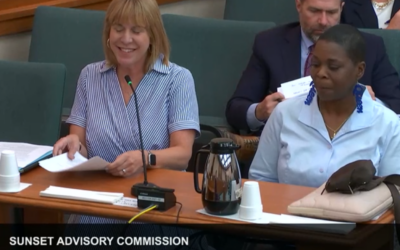
C@R Testifies at Sunset Commission TWC Hearing
C@R Provides Testimony Focused on Opportunity Youth, Early Childhood, and Anti-TraffickingAugust 12, 2026CHILDREN AT RISK leaders Mandi Kimball and Kim Kofron provided public testimony before the Texas Sunset Advisory Commission during its August...

Systems-Change for the Next Generation: Recap of the Child Safety, Security & Opportunity Summit
Written by Lucy Lusk, Summer 2026 Media Fellow, CHILDREN AT RISK On July 16th, CHILDREN AT RISK hosted their 2026 Child Safety, Security, and Opportunity Summit: Systems-Change for the Next Generation. With the support of our incredible sponsors,...

Public Comments on the Sunset Advisory Commission Staff Report: Texas Workforce Commission
July 2, 2026 - CHILDREN AT RISK appreciates the Sunset Advisory Commission staff review of the Texas Workforce Commission (TWC). The staff report describes ways to strengthen the administration, accountability, transparency, technology...