

Systems-Change for the Next Generation
Recap of the Child Safety, Security & Opportunity Summit
Written by Lucy Lusk, Summer 2026 Media Fellow, CHILDREN AT RISK
On July 16th, CHILDREN AT RISK hosted their 2026 Child Safety, Security, and Opportunity Summit: Systems-Change for the Next Generation. With the support of our incredible sponsors, The Harvey R. Jr And Patricia W. Houck Foundation, The Trellis Foundation, HEB, and The John G. & Marie Stella Kenedy Memorial Foundation, experts on systems-change from across governing entities and sectors gathered to discuss the impact of community and advocate voices in creating lasting policy change.
“These young people, these children, are the future of our state. They’re the future of our workforce. They’re the future of our economy…It’s important that we pay attention to this.” said Dr. Bob Sanborn, President and CEO of CHILDREN AT RISK.
Following the introduction by Dr. Bob Sanborn, keynote speaker Dr. Monique Miles (Vice President, Aspen Institute) opened the summit with a discussion on the transformative power of building communities where young people know they matter. She shared the testimony of De’Asia Wiggins, whose poignant story inspired us to define individuals by what they are becoming, rather than what they have survived. Miles highlighted organizations that are serving young people aged 16 to 24 who are not in school or working — self-described as Opportunity Youth — across Texas, ranging from housing to education.
“Every generation inherits stories, and then decides whether to repeat them or rewrite them”, said Miles, “and Texas is rewriting the story.”
Following Dr. Miles’ keynote presentation, CHILDREN AT RISK’s Shannon Epner led a panel focused on the importance of community organizing. Joined by Dr. HaeSung Han, Co-Founder of POETIC; Stephanie Pienta, Director of Opportunity Youth Initiatives at United Way of San Antonio and Bexar County; and Felida Villarreal, President & CEO of VIDA Careers, their conversation explored the role of community voices in driving lasting systems change.
Panelists emphasized that effectively supporting young people requires understanding the full context behind their experiences, including the trauma that may contribute to behaviors such as running away, rather than focusing on those behaviors in isolation. They also underscored the importance of preventing young people from becoming disconnected from school, work, and community from the beginning, instead of addressing that disconnection after it occurs.
As access to social media expands across all age groups, the dangers of online exploitation have also risen to unprecedented levels. Predators often use mainstream platforms such as TikTok and Instagram to target young people, sometimes directly asking for explicit photos or videos. Dr. Han noted that parents are often left “in the dark,” unaware of the exploitative interactions their children may be encountering online.
Speakers also explored how workforce development can serve as a foundation for mental and physical stability, particularly for young adults entering the workforce without the same support systems as their peers.
As Felida Villareal put it, many are “young people who have the drive but not the infrastructure to succeed.”
She also challenged attendees to stop viewing vulnerable communities through a deficit lens and instead ask a different question: What is already working, and how can we meet you where you are? Panelists emphasized the importance of showing young people that sharing their experiences leads to tangible action, while simultaneously pairing those stories with evidence that can move decision-makers.
As Pienta stated, “Stories create empathy, but our data is what creates credibility.”
Following the panel discussion, Texas Immigration Law Council’s Managing Attorney Krystal Gómez joined the conversation to provide a pressing federal immigration policy update. Gómez brought our attention to July 31, when a federal contract administered through the HHSC providing legal representation for unaccompanied children in immigration proceedings was set to expire. According to The Texas Tribune, the contract’s termination could have broader implications for unaccompanied children in federal custody, including the possibility that the children will be transferred to Texas facilities.
Gómez urged advocates who care about anti-trafficking efforts to stay informed and vocal on this ongoing issue: “Please let your voice be heard…these kids need protection.”
Moderated by Caroline Roberts, General Counsel & Senior Director of Public Policy at CHILDREN AT RISK, the second panel discussed the ultimate goal of all advocacy efforts: turning voices into action.
“Do not be afraid,” said Andrea Sparks, Director of Government Relations at Buckner International. “Go talk to your legislators now and often.”
Sparks urged constituents to contact the legislators who represent their districts, particularly during the interim, which ends on January 12, 2027. During this period, lawmakers generally have more time to meet with and hear from constituents than they do during the legislative session, making this an important opportunity to share concerns, priorities, and perspectives directly with elected officials.
Panelists also discussed the value of acting when opportunities for change arise, including during the Texas Sunset Advisory Review Commission process, in which state agencies are evaluated to determine whether their functions remain necessary and whether the agency should continue operating.
Panelist Jason Sabo, Founder of Frontera Strategy, described the Sunset review process and future legislative sessions as an “incredible opportunity” for agencies, youth, and experts to maximize their advocacy efforts and engage policymakers.
However, a new order from Governor Greg Abbott requiring Texas agencies to cut spending by 3% creates challenges for advocacy campaigns. In response, Andrea Sparks cautioned against rhetoric that portrays unhoused youth or young people involved in the juvenile justice system as inherently “bad,” noting that these narratives can shape how policymakers view and respond to their needs. She also stressed the importance of pairing activism with evidence, showing decision-makers when programs and policies produce beneficial results. Data matters, but so do the stories behind it — to create positive change, we must utilize both.
Caroline Roberts left us on a positive note: “The people closest to the challenges often have the best ideas for solutions. Your experiences, successes, and challenges are critical to shaping better policy.”
CHILDREN AT RISK invites everyone to share their experiences through the Community Stories and Advocacy Forum, which helps bring together voices from across Texas to inform policy and strengthen advocacy efforts. Thank you to every speaker, participant, sponsor, and partner who joined us for this year’s summit. Together, we can keep working toward a Texas where all youth thrive.
MORE LIKE THIS
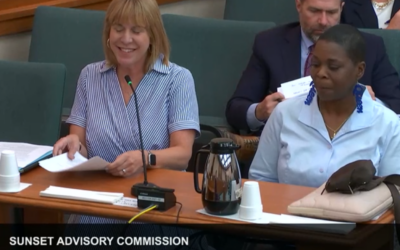
C@R Testifies at Sunset Commission TWC Hearing
C@R Provides Testimony Focused on Opportunity Youth, Early Childhood, and Anti-TraffickingAugust 12, 2026CHILDREN AT RISK leaders Mandi Kimball and Kim Kofron provided public testimony before the Texas Sunset Advisory Commission during its August...
2026 Human Trafficking Sunset Recommendations
Related: Click here to read all of CHILDREN AT RISK’s recommendations for the Texas Sunset Advisory Commission.Every 12 years, most Texas state agencies undergo a comprehensive review by the Sunset Advisory Commission, a process that includes staff...

2026 OYYA Sunset Recommendations
Related: Click here to read all of CHILDREN AT RISK’s recommendations for the Texas Sunset Advisory Commission.Every 12 years, most Texas state agencies undergo a comprehensive review by the Sunset Advisory Commission, a process that includes staff...

Testimony to Texas HIA: Mental Health Impacts, Homelessness, and Criminal Justice System Recidivism
Interim Charge: Mental Health Impacts, Homelessness, and Criminal Justice System RecidivismJune 24, 2026Research consistently demonstrates that stable housing, meaningful employment, educational attainment, and access to health services are among...

System Gaps and Survivor Needs: Human Trafficking Focus Groups
System Gaps and Survivor Needs CHILDREN AT RISK conducted focus groups to better understand the experiences of survivors of Human Trafficking and the organizations that support them. These conversations included survivors and frontline service...
Watch the Event Recording
Get Involved
Our vision is for the state of Texas to be the best possible place for children to grow and families to work. CHILDREN AT RISK’s team works tirelessly to listen to community needs and advocate for public policy that truly supports Texas children and families.
Stay in touch! Sign up for our regular newsletter today to receive monthly updates on the latest research, convenings, and advocacy opportunities.
Questions? Contact us at info@childrenatrisk.org.