
Early Childhood Education & Childcare Testimony
Texas House Committee on Trade, Workforce & Economic Development Hearing
August 26, 2026
Texas has a child care system that serves thousands of children and families every day. While the system is not perfect and there are important improvements that must be made, it is important to recognize what is working. Child care providers across Texas are providing safe, high-quality care that supports children’s development while allowing parents to work and businesses to maintain a reliable workforce.
The question before the Legislature should not be whether Texas should support its child care system, but how we can strengthen and sustain a system that is essential to Texas children, families, and the economy.
Texas Has Made Progress
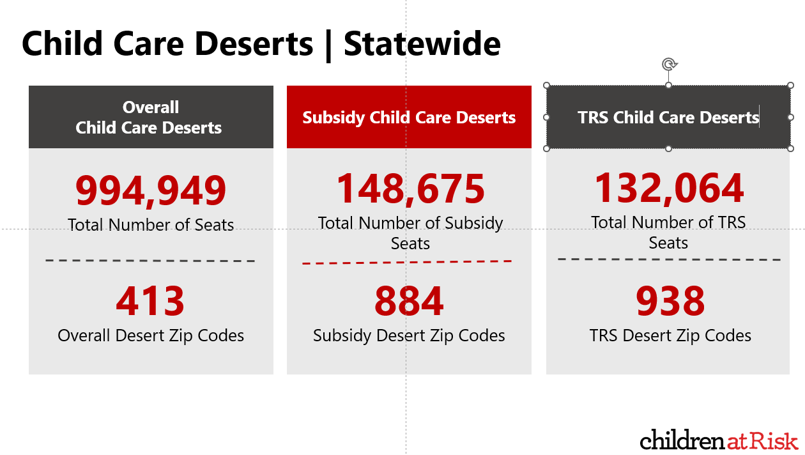
Texas currently has nearly 1 million licensed child care seats, and overall licensed capacity increased by more than 3,900 seats this year. Texas also has more than 132,000 Texas Rising Star seats, representing an increase of nearly 48,000 quality seats. These numbers represent real investments and real progress. They also represent children who have a safe and supportive place to learn and grow and parents who are able to participate in the workforce.
The Texas Legislature also stepped up in 2025 by investing $100 million in TANF dollars in Child Care Services. That investment helped children maintain their child care seats at a time when the system was facing significant financial pressure. With federal funding remaining essentially flat while the cost of providing child care continues to outpace inflation, Texas has experienced an estimated 9.5% reduction in child care slots. Without the Legislature’s $100 million investment, those reductions would have been even greater.
This is an important example of how Texas investment can protect Texas children and families.
The System Is Under Pressure
Despite this progress, families across Texas continue to face significant challenges finding affordable, accessible care.
Texas has 413 overall child care desert ZIP codes, where demand for child care is at least three times greater than available supply. For families who rely on child care subsidies, there are 884 subsidy child care deserts. While subsidy capacity increased by more than 23,000 seats, the number of subsidy deserts actually increased by 106 ZIP codes.
We see a similar pattern with quality care. Texas has added nearly 48,000 Texas Rising Star seats, yet the number of Texas Rising Star deserts increased to 938 ZIP codes.
These numbers demonstrate that the challenge is not simply the number of seats in Texas. We need to ensure that the right care is available in the communities and at the price points where families need it.
The fact that nearly two-thirds of Texas’s overall child care deserts are considered chronic – remaining deserts for three consecutive years – demonstrates that some communities face persistent challenges that cannot be solved through short-term investments alone.
We should continue investing Texas dollars in Texas children while also improving how the system operates. This includes:
- Strengthening coordination across state agencies that administer programs affecting children and families.
- Making access easier for families through coordinated intake, common applications, and transparent information about eligibility, available seats, and waitlists.
- Improving coordination between regulation and quality initiatives so providers receive consistent guidance and can focus their resources on children.
- Targeting investments strategically to communities experiencing persistent child care shortages.
- Ensuring accountability for public investments so Texas can understand where resources are going and whether they are producing the outcomes children, families, and taxpayers deserve.
Texas does not need to start over. We need to strengthen what we have, eliminate any inefficiency, and prioritize the needs of working parents and employers.
The child care system already provides high-quality care for thousands of Texas children and enables parents to work. The Legislature’s $100 million investment in 2025 demonstrated the difference that state investment can make in protecting that system.
As federal resources remain constrained and the cost of providing care continues to rise, the time is now for Texas to build on that commitment.
Investing in child care is investing in Texas children, Texas families, and the Texas economy. We should protect the progress we have made, address the gaps that remain, and continue investing Texas dollars in Texas’s children.
MORE LIKE THIS

Systems-Change for the Next Generation: Recap of the Child Safety, Security & Opportunity Summit
Written by Lucy Lusk, Summer 2026 Media Fellow, CHILDREN AT RISK On July 16th, CHILDREN AT RISK hosted their 2026 Child Safety, Security, and Opportunity Summit: Systems-Change for the Next Generation. With the support of our incredible sponsors,...

Public Comments on the Sunset Advisory Commission Staff Report: Texas Workforce Commission
July 2, 2026 - CHILDREN AT RISK appreciates the Sunset Advisory Commission staff review of the Texas Workforce Commission (TWC). The staff report describes ways to strengthen the administration, accountability, transparency, technology...
2026 Human Trafficking Sunset Recommendations
Related: Click here to read all of CHILDREN AT RISK’s recommendations for the Texas Sunset Advisory Commission.Every 12 years, most Texas state agencies undergo a comprehensive review by the Sunset Advisory Commission, a process that includes staff...

2026 Early Childhood Sunset Recommendations
Related: Click here to read all of CHILDREN AT RISK’s recommendations for the Texas Sunset Advisory Commission.Every 12 years, most Texas state agencies undergo a comprehensive review by the Sunset Advisory Commission, a process that includes staff...