

This annual summit featured educators and community leaders working in the field to provide both teachers and students with a high-quality learning experience as schools work to improve and innovate in the wake of the pandemic.
On Thursday, September 8, the Texas Family Leadership Council, CHILDREN AT RISK and Shell USA, Inc. presented the annual Education Summit. The summit, co-sponsored by AIG Life & Retirement and Amazon, explored the enormous strain placed on teachers and students as they attempt to navigate an uncharted learning environment.
Opening speaker, Frazier Wilson, VP, Shell USA Company Foundation, Manager, Workforce Development & Diversity Outreach, Shell USA, Inc., spoke about how the pandemic highlighted things in our community that effect students socially, emotionally, and academically.
During the last year 73% of Texas youth with depression did not receive treatment… Texas does not meet any of the recommended number of mental health workers… We need to look at the pockets of success across the state to see what we need to do to move our students forward.
In the first session, CHILDREN AT RISK Chief Programs Officer, Kim Parker took a deep dive into the data from CHILDREN AT RISK’s newly released Pandemic Learning Loss Report. The report emphasized the importance of supporting the whole child, especially when it comes to mental health as Texas does not have the recommended number of mental health workers.
During the Creating a More Equitable Learning Environment, moderator Kristen Wells-Lewis (Prairie View A &M University) and panelists Jonathan Feinstein (Education Trust), Tonee Shelton (Communities In Schools of the Heart of Texas), Dr. Sharla Horton-Williams (The Commit Partnership) and Robin McDurham (Transformation Waco) discussed how schools cannot only recover from the pandemic but can come back stronger and better, however, “a mindset shift has to occur if we are going to come out of this pandemic better than we went into it” according to Dr. Sharla Horton-Williams.
The Supporting Teachers Today & Tomorrow panel saw moderator Sharon Jones (CHILDREN AT RISK) and panelists Harrison Peters (Men of Color in Educational Leadership), Erica Milson (Houston A+ Challenge), Rochelle Darville (West St. John High School) and Eduardo Rodriguez (CREED) discuss the challenges that teachers face in the classroom that has led to a teacher shortage in schools across the country. Peters shared how “teachers just want to be heard and want people to listen.” Most importantly, as Rochelle Darville states, “Teachers are more than just educators. We are everything that a student needs in that space. You have to be innovative and have an open mind to reach today’s students.”
In the keynote interview, Alex Shub (School Empowerment Network) talked about the importance of building school leadership pipelines, as he found what makes a new school best is a good school leader. Also, it is important for schools to bring back the joy of learning.
In the first session, CHILDREN AT RISK Chief Programs Officer, Kim Parker took a deep dive into the data from CHILDREN AT RISK’s newly released Pandemic Learning Loss Report. The report emphasized the importance of supporting the whole child, especially when it comes to mental health as Texas does not have the recommended number of mental health workers.
During the Creating a More Equitable Learning Environment, moderator Kristen Wells-Lewis (Prairie View A &M University) and panelists Jonathan Feinstein (Education Trust), Tonee Shelton (Communities In Schools of the Heart of Texas), Dr. Sharla Horton-Williams (The Commit Partnership/School Leadership for Social Justice) and Robin McDurham (Transformation Waco) discussed how schools cannot only recover from the pandemic but can come back stronger and better, however, “a mindset shift has to occur if we are going to come out of this pandemic better than we went into it” according to Dr. Sharla Horton-Williams.
A mindset shift has to occur if we are giong to come out of this pandemic better than we went into it.
The Supporting Teachers Today & Tomorrow panel saw moderator Sharon Jones (CHILDREN AT RISK) and panelists Harrison Peters (Men of Color in Educational Leadership), Erica Milson (Houston A+ Challenge), Rochelle Darville (West St. John High School) and Eduardo Rodriguez (CREED) discuss the challenges that teachers face in the classroom that has led to a teacher shortage in schools across the country. Peters shared how “teachers just want to be heard and want people to listen.” Most importantly, as Rochelle Darville states, “Teachers are more than just educators. We are everything that a student needs in that space. You have to be innovative and have an open mind to reach today’s students.”
In the keynote interview, Alex Shub (School Empowerment Network) talked about the importance of building school leadership pipelines, as he found what makes a new school best is a good school leader. Also, it is important for schools to bring back the joy of learning.
Finally in the High Performing Schools panel, moderator Claire Dutriex and panelists William Clark (Step Charter School), Carol May (H.R. McCall Elementary School) and Josué Covarrubias (Barr Middle School) discussed how their schools have succeeded during the pandemic and how other schools can replicate their success. Josué Covarrubias talked about the importance of building strong communities in schools: “Professional learning communities are a clear tool and system that keeps teachers coming back, even through burnout. They help them feel less alone, they assure you that someone else is going through this and that we can still learn from each other. It gives us the ability to lean on each other. That is so important.”
WATCH THE RECORDING
Thursday, September 8, 2022
The past two years have placed an enormous strain on teachers and students as they attempt to navigate an uncharted learning environment. On Thursday, September 8, CHILDREN AT RISK and Shell invite you to join them virtually for the annual Education summit, Education in Transition: Reshaping America’s Schools in a Post-Pandemic World. Hear from the educators and community leaders working in the field to provide both teachers and students with a high-quality learning experience. Experts from across the nation share innovative practices while C@R’s latest research will explore how students are recovering.
This post was written by Jessica Bundage, Assistant Director, Texas Racial Equity Collaborative, and Rebecca Hernandez, Director of Media Activism at CHILDREN AT RISK.
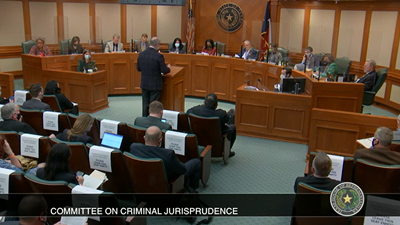
Testimony in Support of HB 1540: Preventing Child Trafficking from RTCs
Children at Risk Senior Staff Attorney and Anti-Trafficking Expert, Jamey Caruthers, testified in support of House Bill 1540 (S. Thompson) in front of the Texas House Criminal Jurisprudence Committee on March 15, 2021. In Fiscal Year 2019, 1,973 children and youth...
Growing Up In Houston: Assessing the Quality of Life of Our Children
In partnership with the United Way of Greater Houston, JPMorgan Chase & Co., CHILDREN AT RISK is excited to share the 2021-2022 edition of Growing Up in Houston: Assessing the Quality of Life of Our Children. The goal of the GUIH project is three-fold: to provide...

January Round-Up: New Year, New Projects, People, & Public Policies!
CHILDREN AT RISK kicked off the new year with new projects and a new legislative session. Below are just a few highlights from our efforts this January! CHILDREN AT RISK & Anti-Trafficking Advocates Rally to End Trafficking NOW! Closing out Human Trafficking...

Access to Affordable High-Quality Child Care is Scarce
By Kaeleigh Hernandez, Early Childhood Education and Sara Moran, Center for Social Measurement and Evaluation (Note: The analyses in this post uses data on child care centers from September 2019) Across Texas, nearly half of all child care providers accept subsidies...

CAR Welcomes 5 New Governing Board Members!
In today’s ever-changing landscape, strong leadership is more valuable than ever! Children at Risk is pleased to announce five additions to our Governing Board of Directors. Their many talents and diverse professional experiences will help our organization continue to...
Access to Affordable High-Quality Child Care is Scarce
By Kaeleigh Hernandez, Early Childhood Education and Sara Moran, Center for Social Measurement and Evaluation (Note: The analyses in this post uses data on child care centers from September 2019) Across Texas, nearly half of all child care providers accept subsidies...
Subsidized Child Care System in Texas
Because money is often a critical barrier to accessing child care, Texas gives working families subsidies that can help them pay for child care. Where does the money for child care subsidies come from, where does it go, and who is left out? Here's a quick primer:...
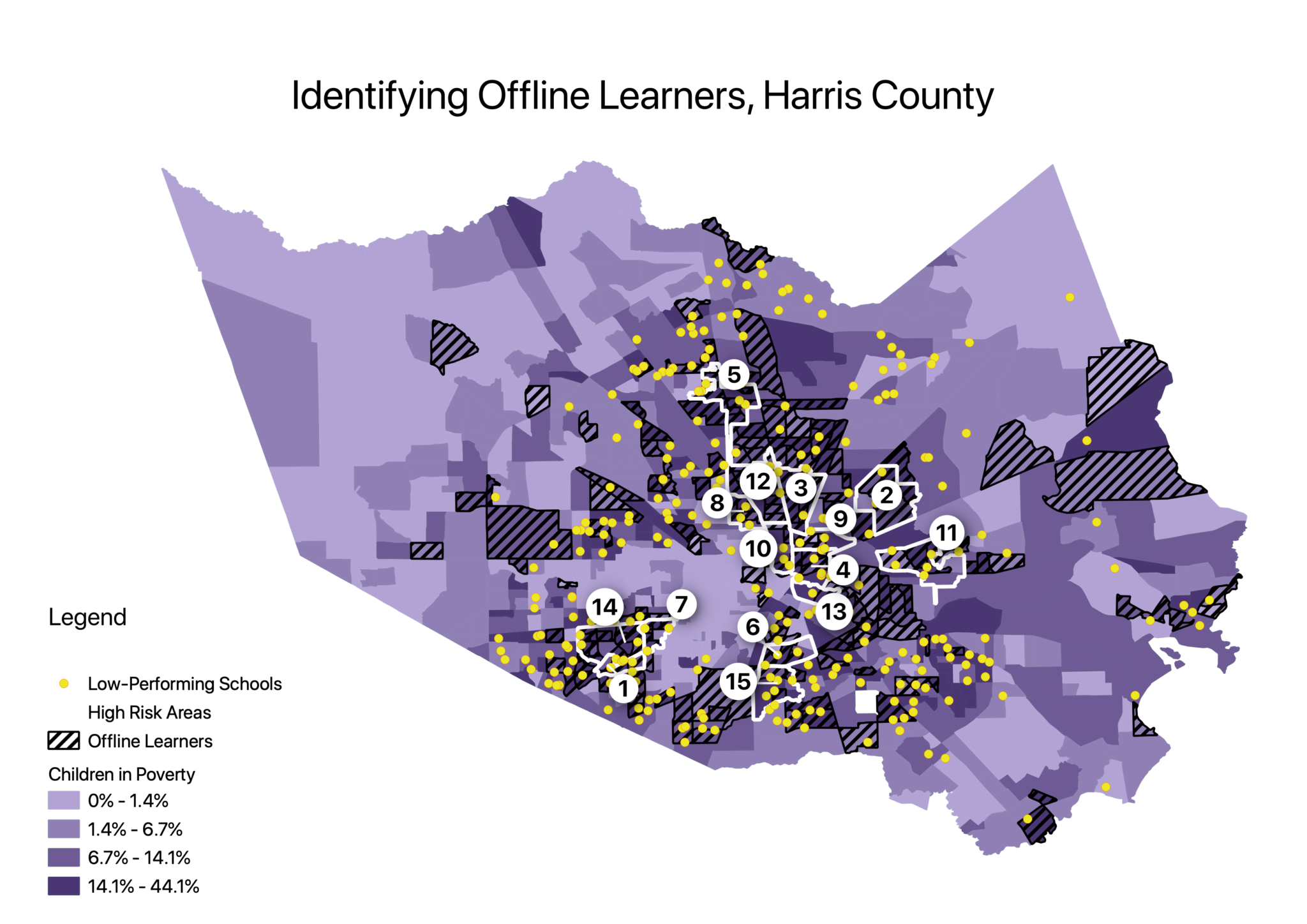
Educational Equity in the Digital Classroom: It is all about access
Forced adaptation is a concept in biology that describes the modification of an organism’s properties by imposing drastic changes to its environment. This may be done purposefully, to bring out characteristics deemed beneficial, such as improving the...